
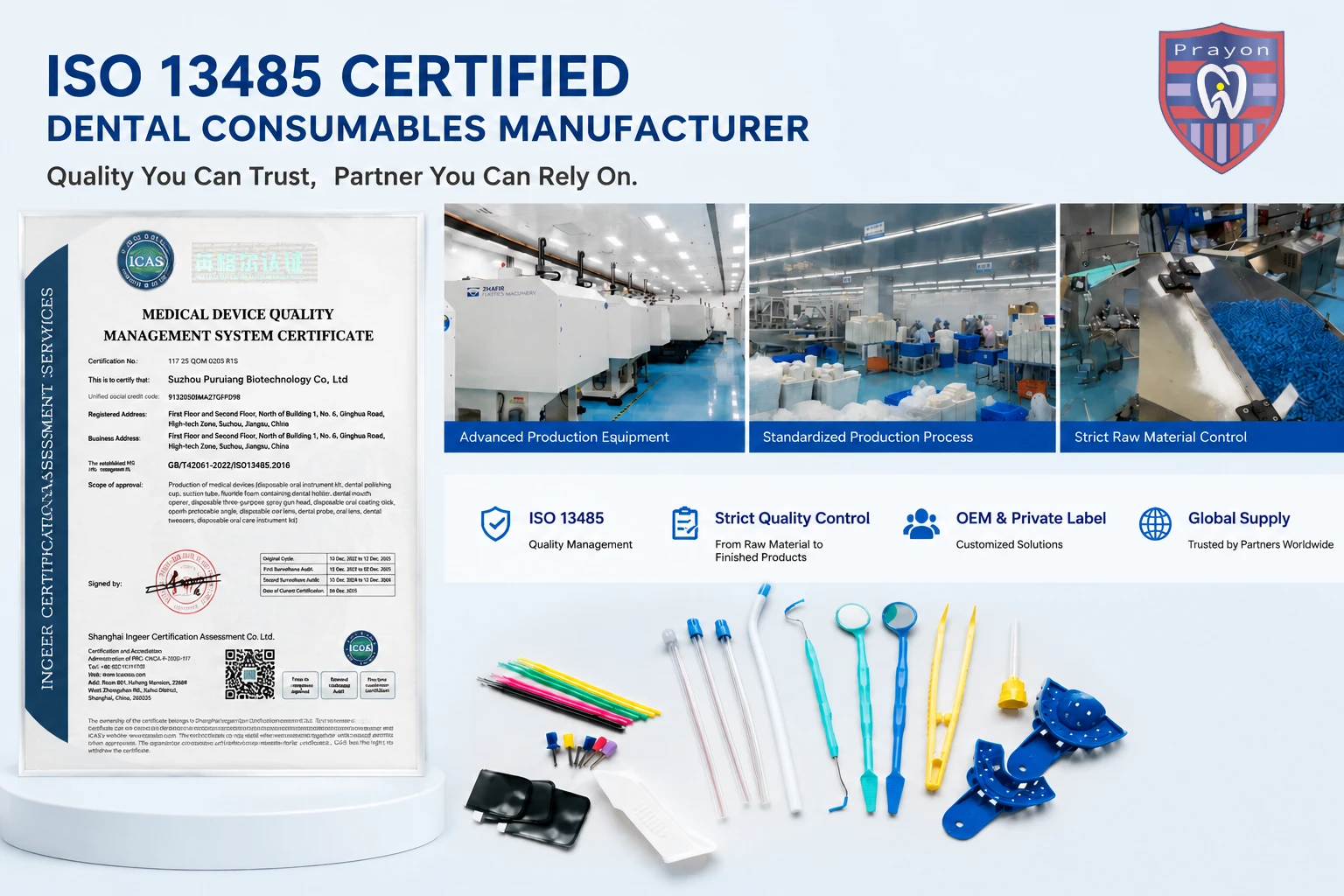
When sourcing dental products from overseas suppliers, many buyers focus on product price, delivery time, and production capacity.
However, one important factor should never be overlooked:
How does the supplier ensure consistent quality?
For dental distributors, importers, and private label brands, ISO 13485 certification is an important indicator when evaluating a medical device manufacturer.
It shows that a supplier has established a structured quality management system to control production processes, reduce risks, and support reliable product delivery.
What Is ISO 13485?
ISO 13485 is an internationally recognized quality management system standard specifically designed for medical device manufacturers.
Unlike general quality standards, ISO 13485 focuses on the unique requirements of medical and dental products, including:
- Quality control
- Risk management
- Product traceability
- Manufacturing process control
- Regulatory compliance
The purpose of ISO 13485 is to help manufacturers consistently produce safe and reliable medical devices through controlled and documented processes.
Why Is ISO 13485 Important for Dental Buyers?
For dental distributors and importers, supplier selection is not only about finding a competitive price.
Poor product consistency can lead to:
- Customer complaints
- Product returns
- Increased costs
- Damage to brand reputation
An ISO 13485-certified manufacturer follows defined procedures for production, inspection, and quality management, helping reduce these potential risks.
What Does ISO 13485 Control in Dental Manufacturing?
ISO 13485 covers the key stages of the manufacturing process, including:
Raw Material Control
Manufacturers need systems to evaluate and control incoming materials to ensure product consistency.
Production Process Management
Production procedures, equipment, employee training, and inspections must be properly controlled and documented.
Product Inspection
Manufacturers need quality inspection procedures to verify that products meet defined requirements before shipment.
Traceability
Production records allow manufacturers to track product batches and quickly identify issues if needed.
ISO 13485 vs ISO 9001: What Is the Difference?
Many buyers see ISO 9001 and ISO 13485 certificates when evaluating suppliers.
The main difference is:
| ISO 9001 | ISO 13485 |
|---|---|
| General quality management | Medical device quality management |
| Used across different industries | Designed for healthcare products |
| Focuses on customer satisfaction | Focuses on product safety and compliance |
For dental products, ISO 13485 is more relevant because it is specifically developed for medical devices.
What Should Buyers Look for Besides ISO 13485?
Although certification is important, it should not be the only evaluation factor.
A reliable dental supplier should also have:
Manufacturing Capability
A professional factory should have controlled production processes, quality inspection systems, and experienced technical teams.
OEM & Private Label Experience
For dental brands and distributors, the ability to support customized packaging, labeling, and product solutions is essential.
Export Experience
A supplier familiar with international markets can better support documentation, communication, and long-term cooperation.
How Prayon Dental Supports Global Dental Partners
At Prayon Dental, we understand that international buyers need more than just a product supplier.
As an ISO 13485-certified dental consumables manufacturer, we focus on providing:
- Stable product quality
- Controlled manufacturing processes
- OEM and private label solutions
- Reliable supply support
Our product range includes:
- Disposable Dental Examination Kits
- Saliva Ejectors
- Dental Applicator Tips
- Suction Products
- Barrier Protection Products
- Other disposable dental consumables
We work with dental distributors, importers, and brands worldwide to develop reliable product solutions.
Frequently Asked Questions
Is ISO 13485 certification mandatory for dental suppliers?
Requirements depend on the market and product category. However, many international buyers prefer suppliers with ISO 13485 certification because it demonstrates professional quality management.
Does ISO 13485 guarantee perfect products?
No certification can guarantee zero defects. However, ISO 13485 requires manufacturers to establish systems that reduce risks and improve product consistency.
How can buyers verify ISO 13485 certification?
Buyers can request:
- Certificate copy
- Certification scope
- Certification body information
- Validity period
A professional supplier should provide transparent certification information.
Conclusion
ISO 13485 is an important reference when choosing a dental manufacturing partner.
For dental distributors and brands, working with an ISO 13485-certified supplier can help improve quality confidence, reduce sourcing risks, and build a more reliable supply chain.
At Prayon Dental, we are committed to supporting global partners with professional manufacturing capabilities, reliable dental consumables, and flexible OEM solutions.