
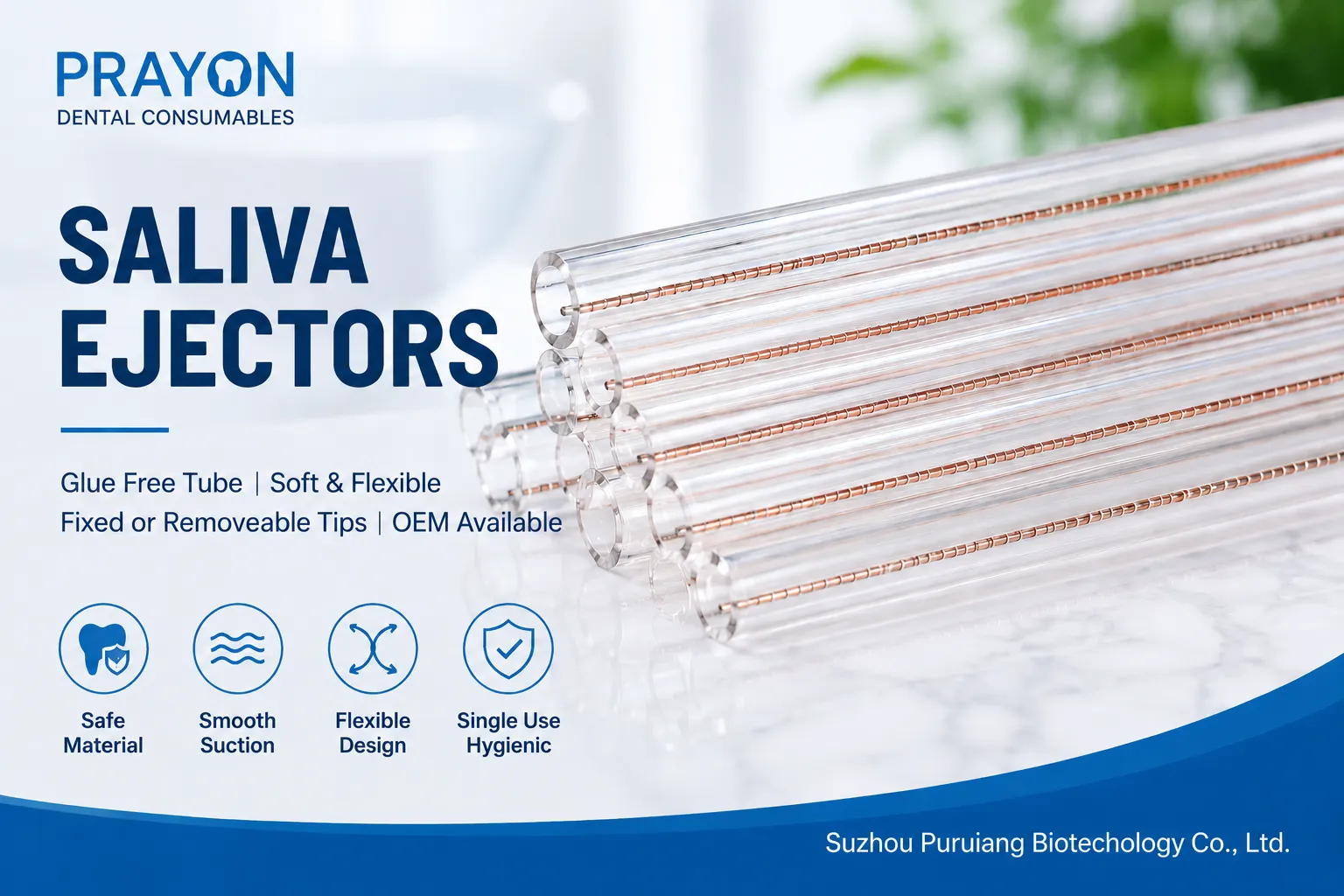
Most saliva ejectors look almost identical. They all have three basic components:
•A flexible PVC tube
•A copper wire
•A suction tip
From the outside, products from different manufacturers often look the same. The real difference is usually hidden inside the tube. That's where engineering begins.
Many distributors focus on tube diameter, softness or packaging.These factors are easy to see. What is much harder to see is how the wire is secured inside the tube. It may seem like a small manufacturing detail, but it directly affects how the tube behaves every time a dentist bends it during treatment.
Why Is Glue Still Widely Used? Adhesive has long been the standard method for securing the copper wire inside a saliva ejector. The process is straightforward, efficient and well suited to high-volume production. For many applications, it delivers acceptable performance.
When developing our saliva ejectors, we asked ourselves a simple question: Is adhesive the only way to secure the wire? That question led us to rethink the manufacturing process instead of simply improving the adhesive. Our answer was to redesign the manufacturing process rather than improve the glue. During production, the copper wire is mechanically locked into the PVC tube through an embossing process. Instead of depending on adhesive, the tube structure itself holds the wire securely in place.
What Does This Mean in Daily Clinical Use?
1. Stays Bent After Positioning
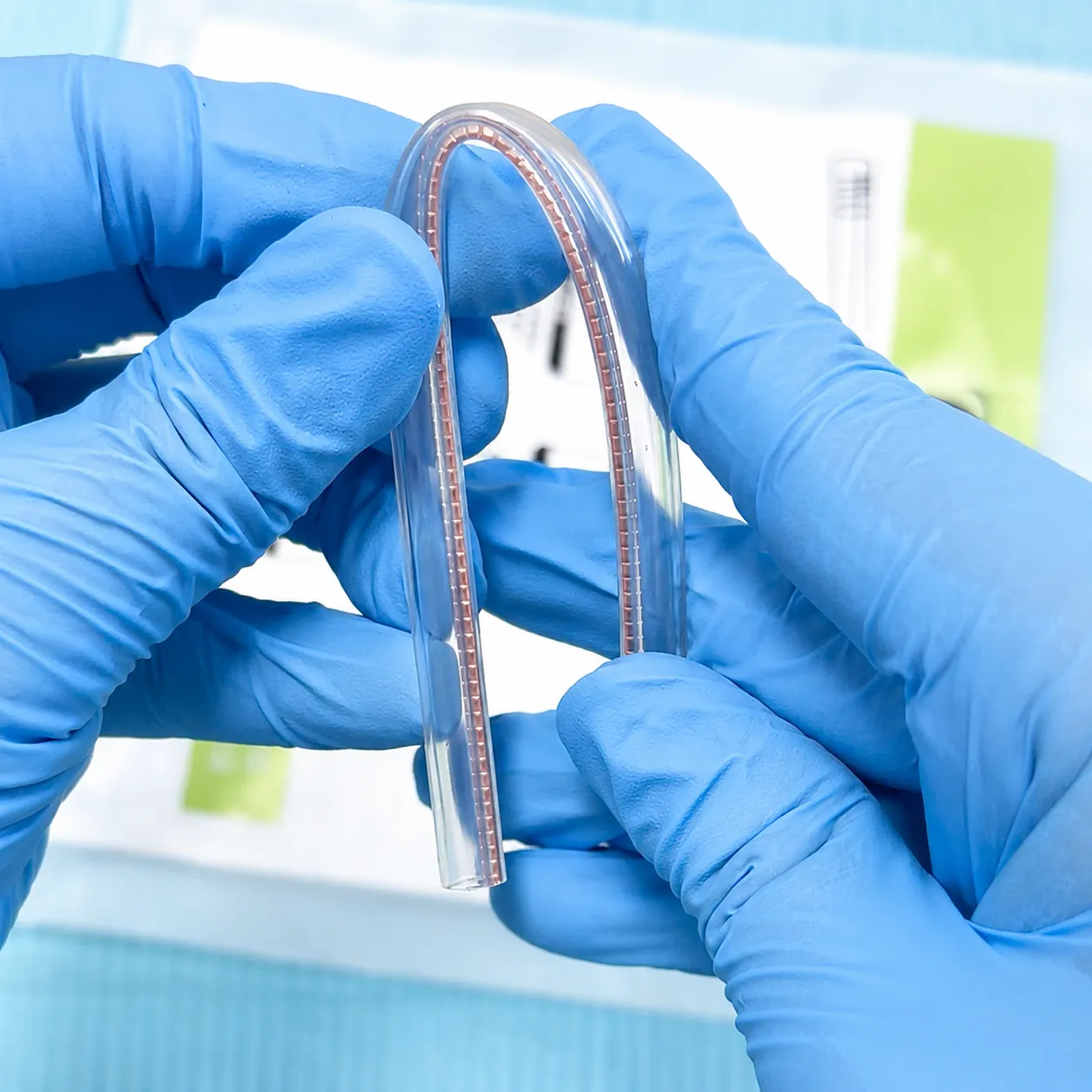
A saliva ejector should stay where it is placed. If the tube slowly springs back, the dentist or assistant has to reposition it during treatment. Our embossing structure is designed to minimise spring-back and help the tube maintain its intended shape after bending.
2. The Wire Stays Inside the Tube
The internal copper wire should remain securely fixed throughout normal use. Repeated bending places continuous stress on the wire. Our embossing process helps keep the wire securely fixed inside the tube, reducing the likelihood of movement or exposure during normal clinical use.
3. A Structural Difference, Not Just a Material Difference
Removing glue was never the objective. The objective was to create a more reliable way of securing the wire. Instead of relying on an additional bonding material, our design allows the tube structure itself to hold the wire in place. This creates a cleaner and more consistent internal structure. For us, glue-free manufacturing is not simply about eliminating adhesive. It is about designing the tube differently from the inside out.
What Should Distributors Ask Before Choosing a Supplier? Before selecting a saliva ejector supplier, consider asking:
•How is the wire fixed inside the tube?
•Does the tube keep its shape after repeated bending?
•Can the wire move inside the tube?
•Is glue used during manufacturing?
•What quality checks are performed?
At first glance, one saliva ejector looks much like another. The real difference is often hidden inside the tube. Understanding how the internal wire is secured provides a better way to evaluate manufacturing quality than simply comparing colour, packaging or price.
For distributors, OEM partners and dental brands, paying attention to these engineering details can lead to more consistent product performance and fewer quality concerns over time. If you're evaluating saliva ejector suppliers or developing an OEM product, we'd be glad to share more about our manufacturing approach and discuss which tube structure best fits your market.
Good products begin with good engineering. Great engineering begins with asking better questions.